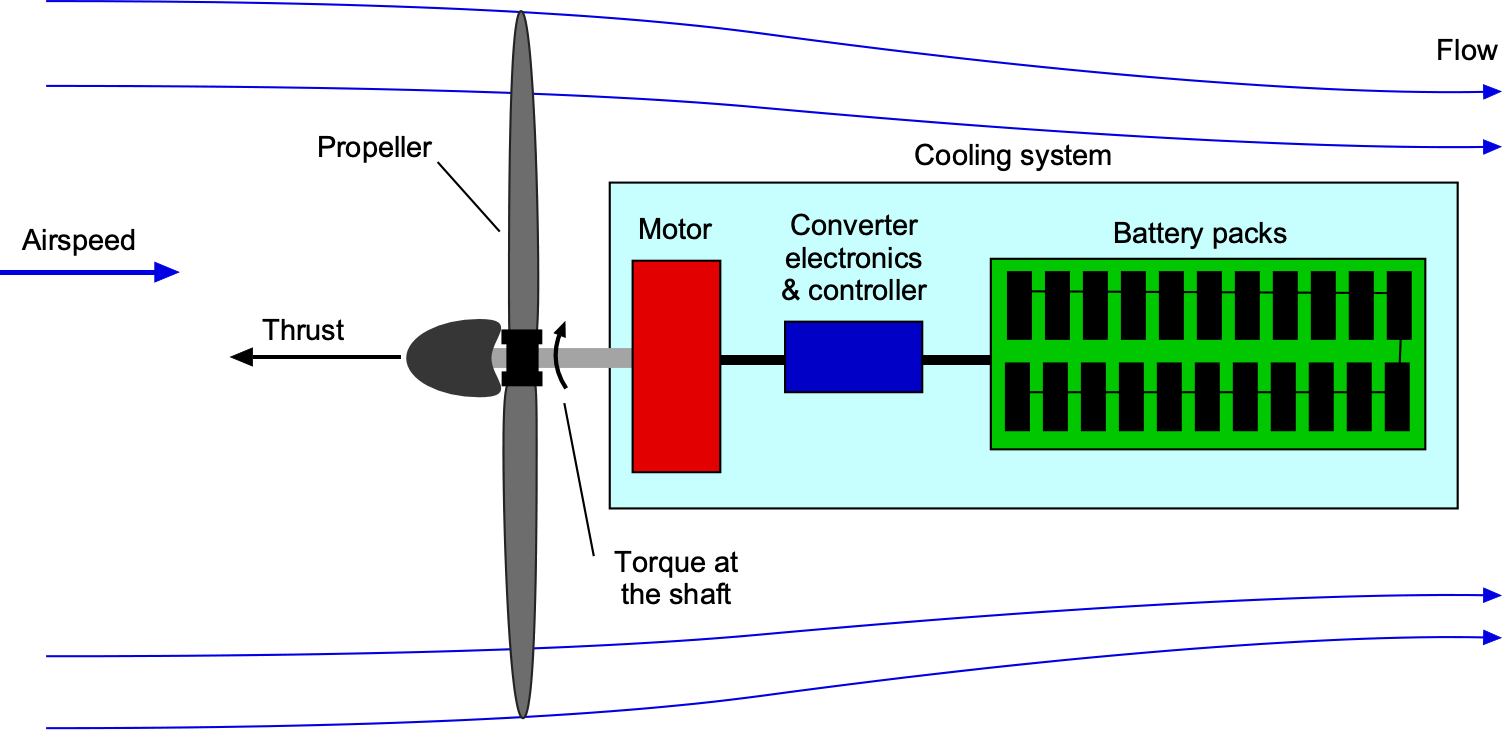
The defining constraint of electric propulsion is energy density. Current aerospace-grade lithium-ion cells deliver approximately 250 to 300 Wh/kg at cell level [1], with somewhat lower figures at pack level once thermal management, structural housing, and battery management systems are included. Aviation kerosene by comparison contains approximately 12,000 Wh/kg in chemical energy [2]. Even after accounting for the higher conversion efficiency of an electric powertrain (electric motors typically convert more than 90 percent of input energy to shaft power, against 30 to 40 percent for a gas turbine [3]), the gap is large enough to constrain electric VTOL designs to relatively short missions, generally under 250 km on current battery technology.
Two other characteristics shape the operational profile. Battery weight does not decrease as energy is consumed, unlike fuel mass, so an electric aircraft lands as heavy as it took off. And battery charging time is a significant constraint on aircraft utilisation: an aircraft on a charger is an aircraft not flying.
Distributed electric propulsion is the architectural enabler behind much of the contemporary VTOL design space. The ability to drive many independent propulsion units from a common electrical bus, each motor controlled in real time, makes possible the fine-grained thrust distribution that supports tiltrotor, lift-and-cruise, and multicopter configurations alike. It is also the basis for the high level of redundancy that the new generation of VTOL aircraft can claim, since the failure of any individual motor affects only its own propulsion unit.